
Houston Flood Insurance
What Homeowners Need to Know Before the Next Storm
Written by Patricia Cousin
Owner, Legacy Shield Insurance Group
Texas-Licensed Property and Casualty Insurance Agent
Last reviewed: September 2026
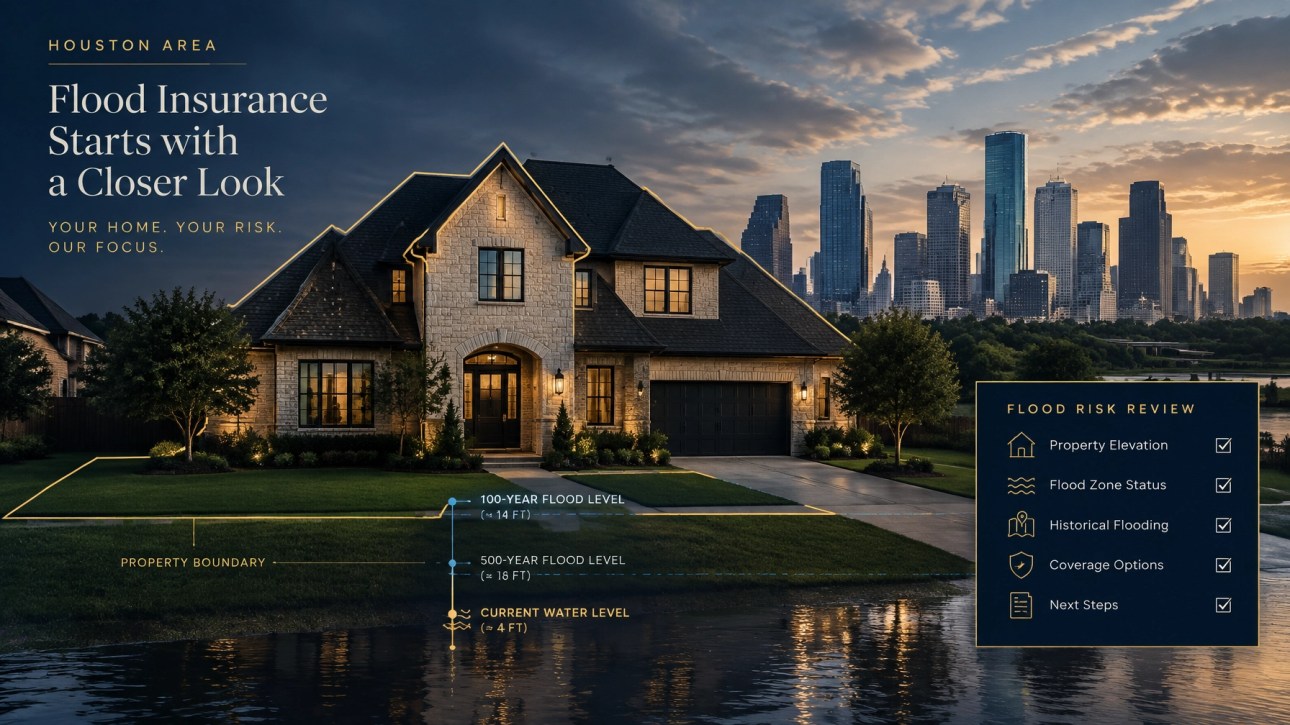
Review your flood exposure before the next storm—not after the forecast changes. Legacy Shield Insurance Group helps Houston-area homeowners and real estate investors evaluate flood risk, understand coverage gaps, and structure protection around the property they actually own.
September brings peak storm-season awareness and National Preparedness Month, but flood planning should not be limited to one month. In Houston, heavy rainfall, bayou overflow, drainage challenges, rising water, and coastal storm surge can create exposure even when a property is not located in a high-risk flood zone.
The right question is not simply, “Is flood insurance required?”
The more important question is: What would happen to this property, its contents, and its financial plan if floodwater entered the structure?
Flood risk in Houston is not limited to a mapped flood zone
Houston-area homeowners often assume flood insurance is only necessary for properties near a bayou or in a designated high-risk zone. That assumption can leave significant gaps.
Flooding may result from:
- Intense rainfall that overwhelms local drainage systems
- Bayou, creek, or channel overflow
- Street flooding that reaches garages, foundations, or living areas
- Storm surge affecting properties closer to the Gulf
- Water moving across low-lying or poorly drained areas
- Drainage patterns changed by nearby construction or development
Flood maps are valuable tools, but they are not a complete assessment of every property’s exposure. A home outside a high-risk zone may still experience meaningful flood risk. The Houston Floodplain Management Office provides local floodplain and drainage information, but homeowners should also review the property’s elevation, construction, surrounding terrain, prior loss history, and proximity to waterways.
Homeowners insurance and flood insurance serve different purposes
A standard Texas homeowners insurance policy may cover certain sudden and accidental water losses, such as damage from a burst pipe. It may also cover certain water damage associated with wind or storm-created openings, subject to the policy’s terms, exclusions, and deductibles. However, homeowners policies generally do not cover flooding caused by rising or accumulating surface water.
That commonly includes water from:
- Heavy rainfall and surface runoff
- Overflowing bayous, creeks, or rivers
- Storm surge
- Rising coastal or tidal water
- Widespread drainage or street flooding
Flood insurance is usually purchased as a separate policy. It is designed to address direct physical damage caused by flooding, subject to the policy’s definitions, limits, deductibles, exclusions, and conditions.
This distinction matters after a major storm. A homeowner may have strong dwelling coverage under a homeowners policy and still have no protection for water that enters from outside the structure.
Review both policies together. Your homeowners policy may protect against wind, hail, fire, theft, liability, and certain types of internal water damage. A separate flood policy may address covered flood damage to the building and contents. Neither policy should be assumed to replace the other.
Frequently asked questions about Houston flood insurance
Does homeowners insurance cover flooding in Texas?
Generally, no. Standard homeowners policies typically exclude flooding caused by rising or accumulating surface water. Flood insurance is normally purchased separately. Coverage always depends on the specific policy language and cause of loss.
Do I need flood insurance if I am not in a flood zone?
You may still need it. Many properties outside high-risk flood zones can experience flood losses from heavy rainfall, drainage overflow, or street flooding.
How long does flood insurance take to become effective?
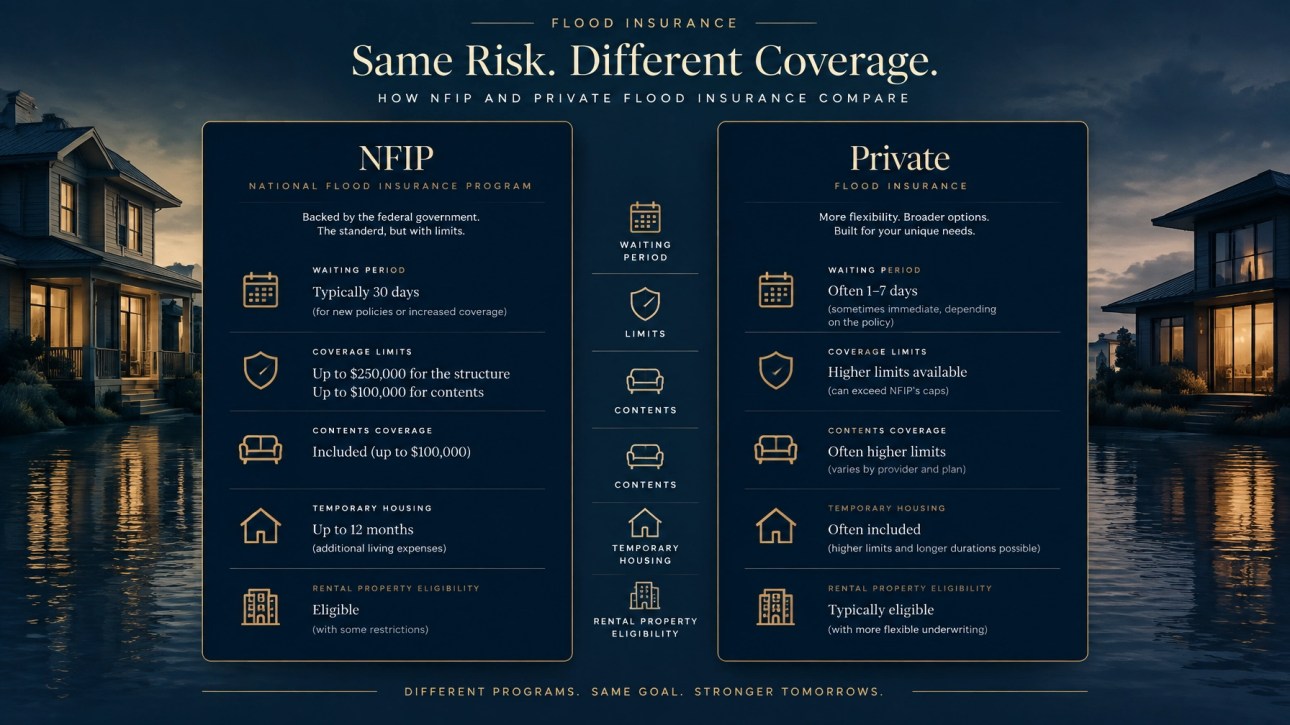
NFIP flood insurance generally has a 30-day waiting period, subject to specific exceptions. Private flood insurance waiting periods vary, so effective dates should always be confirmed before purchase.
What is the difference between NFIP and private flood insurance?
NFIP policies follow a standardized federal structure with set coverage limits. Private flood insurance may offer different limits, broader features, or different underwriting, depending on the property.
Does flood insurance cover temporary housing?
Not always. Temporary housing or additional living expenses are often limited or excluded, depending on the flood policy form.
Can landlords and real-estate investors buy flood insurance?
Yes. Landlords and real-estate investors can often buy flood insurance, but the policy structure should match the property’s use, occupancy, and ownership.
How much flood insurance can I purchase?
It depends on the policy type, property characteristics, and market. NFIP residential limits are generally capped, while some private flood options may offer higher limits for eligible properties.
What flood insurance may cover
Flood insurance is typically divided into two categories:
Building coverage
Building coverage may apply to eligible parts of the structure, including:
- The foundation and structural components
- Electrical and plumbing systems
- HVAC equipment and water heaters
- Permanently installed appliances
- Built-in cabinets and certain permanently installed finishes
- Certain flooring and stair systems
- A detached garage, subject to policy terms and limitations
For policies written through the National Flood Insurance Program, residential building coverage is generally subject to a maximum limit of $250,000. Private flood programs may offer different limits and broader structures of coverage.
Contents coverage
Contents coverage is separate from building coverage. If selected, it may help cover eligible personal property such as:
- Furniture and household goods
- Clothing and bedding
- Electronics
- Washers and dryers
- Portable appliances
- Certain rugs and other personal belongings
For National Flood Insurance Program policies, residential contents coverage is generally subject to a maximum limit of $100,000. Higher limits or additional features may be available through other flood insurance markets, depending on property characteristics and underwriting.
Coverage is not unlimited. Flood policies may contain restrictions for basements, outdoor property, landscaping, fences, pools, temporary living expenses, vehicles, and business interruption. Personal auto coverage may be relevant for vehicles damaged by flooding, while a business or rental property may require a different policy structure altogether.
The Texas Department of Insurance flood insurance guidance is a useful starting point, but your individual policy form and declarations determine the actual protection available.

The 30-day waiting period can change the timing of your decision
One of the most important facts about flood insurance is the waiting period.
NFIP flood insurance generally has a 30-day waiting period, subject to specific exceptions. Private flood insurance waiting periods vary by carrier and policy, and some may be shorter. Coverage effective dates should always be confirmed before purchase.
The practical takeaway is simple:
Do not wait for a named storm, evacuation notice, or neighborhood flooding to begin reviewing flood insurance.
You can review general program information through FloodSmart’s flood insurance resources and FEMA’s flood insurance information. For a property-specific recommendation, work with an independent brokerage that can review multiple placement options and explain the differences.
Why Houston real estate investors need a separate review
Flood exposure becomes more complex when the property is owned for investment purposes.
A standard homeowners policy may not be appropriate for a rental, vacant property, short-term rental, or property being renovated. Real estate investors should evaluate:
- Whether the building is occupied, vacant, or between tenants
- Whether rental income is part of the financial plan
- Whether the property is listed for sale
- Whether renovations or construction are underway
- Whether furnishings, appliances, or equipment are owned by the investor
- Whether the structure is insured at an appropriate valuation
- Whether flood, wind, liability, and vacancy exposures are coordinated
A property listed for sale still represents a significant asset. A vacant home may be more difficult to monitor during severe weather. A rental property may require landlord coverage rather than owner-occupied homeowners coverage. A building under construction may need builders risk, with flood protection reviewed separately and carefully.
This is where insurance for Texas real estate investors requires more than a basic quote. The policy should reflect how the property operates, how it is occupied, and what financial obligations continue after a loss.
A practical Houston flood insurance review
While hurricane season is underway, homeowners and investors should review the following:
Property exposure
- Is the property near a bayou, creek, drainage channel, or low-lying roadway?
- Has the area experienced street or yard flooding in the past?
- Is the home elevated, slab-built, or constructed with a lower-level garage?
- Could nearby development affect drainage patterns?
- Is the property inside or outside a mapped high-risk flood area?
Coverage structure
- Is flood insurance in force today?
- When does the policy become effective?
- Are building and contents coverage both included?
- Are limits sufficient for the structure and personal property?
- How does the flood deductible compare with the homeowners deductible?
- Are basements, garages, detached structures, or improvements subject to limitations?
- Would temporary housing, rental income, or business income remain uninsured?
Financial and ownership considerations
- Is there a mortgage requirement?
- Could the cost to repair or rebuild the flood-damaged structure exceed the available building coverage limit?
- Is the home owned personally, through an entity, or as part of a portfolio?
- Is the property vacant, rented, listed for sale, or under construction?
- Are the flood, homeowners, landlord, windstorm, and vacancy policies structured consistently for the property’s ownership and occupancy?
Why an independent brokerage adds value
As an independent Texas insurance brokerage, Legacy Shield Insurance Group can review options across multiple standard, private flood, NFIP, and specialty insurance markets, depending on the property and its eligibility. That market access allows us to compare options and structure coverage around the property, rather than forcing every risk into the same solution.
Our approach is advisory and deliberate. We help clients understand where homeowners insurance ends, where flood insurance begins, and how property, liability, income, and asset-protection concerns fit together.
This is The Luxury of Certainty: not a promise that storms can be prevented, but the confidence that your protection has been thoughtfully designed before one arrives.
Protect your Houston property before the forecast changes
Flood insurance is not simply a price decision. It is a risk and value decision involving your home, your equity, your belongings, and the future you are building.
Review your flood exposure before the next storm—not after the forecast changes. Legacy Shield Insurance Group can help you evaluate your current homeowners insurance, identify flood-related gaps, and compare tailored options for your property or portfolio.
Explore Legacy Shield Insurance Group’s insurance services or learn more about our advisory approach.
Protect What You’ve Built. Elevate What’s Next.
Insurance disclaimer: This article is provided for general educational purposes and does not modify, extend, or guarantee coverage. Coverage availability, limits, deductibles, waiting periods, terms, and exclusions vary by policy, carrier, program, property, and eligibility. Please review the applicable policy documents and consult a licensed insurance professional for property-specific guidance.